Wheels up
Washington Dulles → CopenhagenEvening flight out of Dulles on Scandinavian Airlines. Dana takes Lincoln's chair at the airport's America 250 display on the way to the gate — a very Washington send-off.
Two Washington, DC painters, ten days in Latvia. A festival in the cellars of an old lemonade factory, thirty-eight new paintings made on the spot, Latvian radio and television — and the city that got into every picture.
In the summer of 2026 the organisers of Art for Meat Tax — Māksla par gaļas nodokli, a Riga festival where artists take on the way we eat — invited two painters from Washington, DC: Dana Ellyn, whose paintings of animals and appetite they had followed for years, and her husband Matt Sesow.
The curator, Katrīna, told the story on Latvian radio: “She said: this subject feels so important to me — we're coming. I sat there for a while gripping the table, then wrote back: do you understand we're a no-budget event? — Yes, we understand. We're coming.”
So we came. We flew out of Dulles on 31 August with the show rolled up in our luggage — Dana's twenty-one paintings and Matt’s fourteen — plus brushes, paper and a plan to do what we always do when we travel: paint every day, wherever we land, and post the new work the same evening. We stayed in a 1903 apartment house on Lāčplēša iela, a street named for Latvia's epic hero the Bear Slayer, and turned the kitchen table into a studio.
By the time we flew home on 10 September — Matt's sixtieth birthday — we had hung a show in the vaulted cellars of a former brewery and Soviet lemonade factory, talked on Radio NABA and Latvian Television, given an artist talk during Riga's White Night and sat on the festival's closing panel, walked the city from the Academy of Sciences roof to the Bremen Town Musicians, and made 38 new paintings in Riga. This page puts all of it in one place — the paintings, the places that inspired them, the history of those places, the press, the recordings and our photographs, each with its date and location.
“They're very modest… but in truth they are very well-known artists. It's a huge honour for us.”— Katrīna, festival curator, on Radio NABA, 4 Sept 2026 (translated from Latvian)
“They said, oh, do you know how to paint? And I lied. And I just said, oh, yeah, sure, I can paint. Because I wanted to be cool.”— Matt Sesow, on how he started painting at 28, festival panel, 6 Sept 2026
“I paint about all the things you're not supposed to discuss at the dinner table — vegetarianism, veganism, religion, politics.”— Dana Ellyn, festival panel, 6 Sept 2026
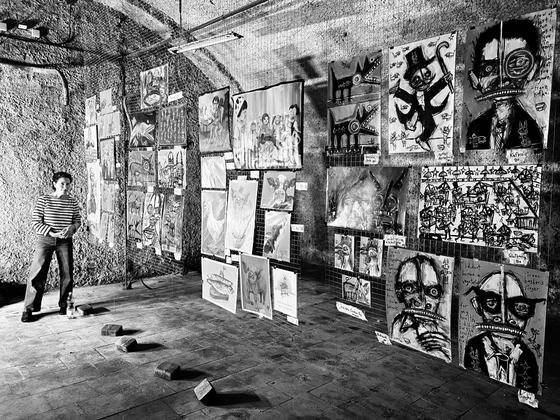
The second Art for Meat Tax festival brought together 27 artists from seven countries — among them Latvia, the United States, New Zealand, Poland, the United Kingdom and Canada — to use contemporary art to open a conversation about what excessive meat consumption costs our health, the climate, biodiversity and the animals themselves.
Its guiding themes are empathy, environment and health. The special theme for 2026 was gluttony (rijība): “Buy more, eat more, use more, throw more away,” as the curator Katrīna Āboltiņa put it to LSM. The organisers — Sandris Mūriņš, Roberta and Katrīna — ran it with no budget at all (“pure activism”), and every euro from sales went straight to the artists. The festival takes no commission.
Dana was clear on the radio about where she stood: she painted animals, food and appetite, but did not paint about the tax itself — “that's not a subject for me to weigh in on as an American coming to Latvia.”
The exhibition hung in the cellars; performances and talks ran in the courtyard above. On Saturday the festival was an official venue of Baltā nakts, Riga's all-night contemporary-culture forum — and both Latvian Public Broadcasting (LSM) and the White Night programme illustrated the festival with Matt's painting The Latvian Blue Cow.
Latvian Television films us painting in the apartment — LTV Kultūras ziņas (Culture News).
Install day. Both walls hung in the cellars by 17:37.
09:00 Radio NABA 95.8 FM, live. 18:00 lecture by Jānis Brizga; 19:00 opening and first cellar tour.
Baltā nakts / White Night, 12:00–00:20. 14:00 Dana Ellyn & Matt Sesow — artist talk (in English).
17:00 “Activism Art — Changing the World One Painting at a Time”: Dana, Matt and Katrīna Tračuma, moderated by Sandris Ādminis. The festival's closing event.
Matt showed 14 paintings, Dana 21. Tours went down every 15–20 minutes because the show was underground. “Historic, interesting — and a little spooky,” the curator warned radio listeners. “Wear good shoes.”
Veldze is Latvian for coolness — the relief of a cold drink on a hot day. It was the name of a Soviet-era soft-drinks factory, and it is still spelled out in big letters on the roof of the block between Matīsa and Bruņinieku streets, seven minutes' walk from where we stayed. Today it is Radošā rūpnīca Veldze, the Veldze Creative Factory: studios, small shops, cafés, a courtyard — and, underneath, a labyrinth of vaulted brick and white-tiled cellars where the festival hung its show.
The site is older than the lemonade. According to the 2024 architectural brief for the block's redevelopment, a brewery belonging to Gustav Kuntzendorff operated here from 1796. In 1872 a new brewery complex was designed for him — Brauerei Anlage für Herrn Gust. Kuntzendorff — on what was then Lager Strasse (Lēģeru iela, today Matīsa iela) in Riga's first suburb. There were five production buildings, several of them over extensive cellars; later came an ice cellar, warehouses, sheds, a carriage house, a stable and a brick wall around the yard, with shops and a restaurant along the street.
Those cellars are what we walked through. Beer needs cold, and before refrigeration a brewery's cellars were its machinery. We found a deep brick shaft with a crane hook still hanging in it, old pipework and wooden hatches in the vault ceilings, a water meter left on the tiles, and a white-tiled tunnel that on opening night was ankle-deep in rain from the storm that hit Riga that week.
Gustav Kuntzendorff's brewery is working on the site.
A new brewery complex is designed for Kuntzendorff: five production buildings with large cellars; later an ice cellar, warehouses, stable and carriage house.
After the Second World War a wine and liqueur factory starts work in the old brewery buildings. It is later renamed the Fruit and Berry Wine and Soft Drinks Factory “VELDZE” — the lemonade years.
Veldze is merged into the brewery-winery “Rīga”.
After independence, the state company Dzērienu rūpnīca Veldze (Veldze Drinks Factory) is privatised.
The Veldze company is liquidated. Production stops; artists, makers and small businesses move in.
An architecture competition for the block calls for the historic vaulted cellars, which run under most of the site, to be restored and opened to the public.
4–6 September: Art for Meat Tax fills the cellars with 27 artists' work — and an official stop on Riga's White Night.
Source: “Apbūves attīstība Rīgā, Matīsa ielā 8”, design programme for the 2024 architecture competition, section 4 (historical development).
Four clips Matt shot on opening night, 4 September, with a vintage 8mm-film app.
Matt Sesow brought fourteen paintings on thick archival paper — animals with his trademark lips and teeth, a Bremen Town Musicians, The Latvian Blue Cow, Grey Peas, and his vegetarian heroes: Franz Kafka, Isaac Bashevis Singer and a Charles Bukowski. Two were painted on paper Matt took from Felix Gonzalez-Torres's “Untitled” (Always to Return) at the National Portrait Gallery in Washington.
His wall text told the story that started it all: a summer evening in rural Nebraska in the 1970s, an eight-year-old boy running across a runway as a small plane landed, and the hand he lost. He began painting at 28, as a programmer at IBM, and hasn't stopped since.
One painting on Matt's wall came with a soundtrack. At the end of the Radio NABA interview the hosts played The Smiths' “Meat Is Murder”, and Matt told the story behind his painting Vegetarian: its “I don't eat my friends” comes from the T-shirt worn by a girl in the video for Morrissey's “Every Day Is Like Sunday”.
Dana Ellyn hung twenty-one paintings on the festival's themes — Playing Favorites (three girls holding a bulldog, a rabbit and a piglet, sourced from a 1943 U.S. government photo captioned "pets now raised for food"), Selective Compassion, Some Toys are More Equal Than Other Toys, the butcher's-chart series Sum of Her Parts, Sunday Dinner and This Little Piggy, and the first two of her Latvian food paintings: Little Pig (Cūciņa) standing in a bowl of grey peas, and Sprats on Rye.
Across the twenty-one, the show held two registers at once — gentler pieces sitting beside harder, more confrontational ones, the same range Dana has worked in for years. Across all of it runs a rule she's held to for years — the animals meet the viewer's eye, the humans usually don't.
"My art highlights contradictions in public perception that we no longer see — a cute piglet on a T-shirt and his mother in a shopping bag. If my paintings make you think even for a moment, the goal has been achieved."
— Dana Ellyn, quoted by Delfi, 21 July 2026 (translated)
We brought paper and brushes, bought paint in Riga, and worked every day between interviews, walks and gallery hours — Dana at the window, Matt at the table, sometimes past eleven at night. Some paintings came from a statue or a shop sign; one came from a cheese label; one was promised live on the radio and painted that afternoon. Here are the pictures side by side with the photographs of what started them.
Dana and Matt kept going in Washington: creating paintings that continued to be inspired by what they saw and experienced in Riga.
Part of the method: we photograph labels, signs, records and old magazines wherever we go. On 7 September Dana worked through a stack of Soviet-era Latvian magazines at the apartment — the 1979 cover of Veselība (“Health”) became her painting Swim Lesson.
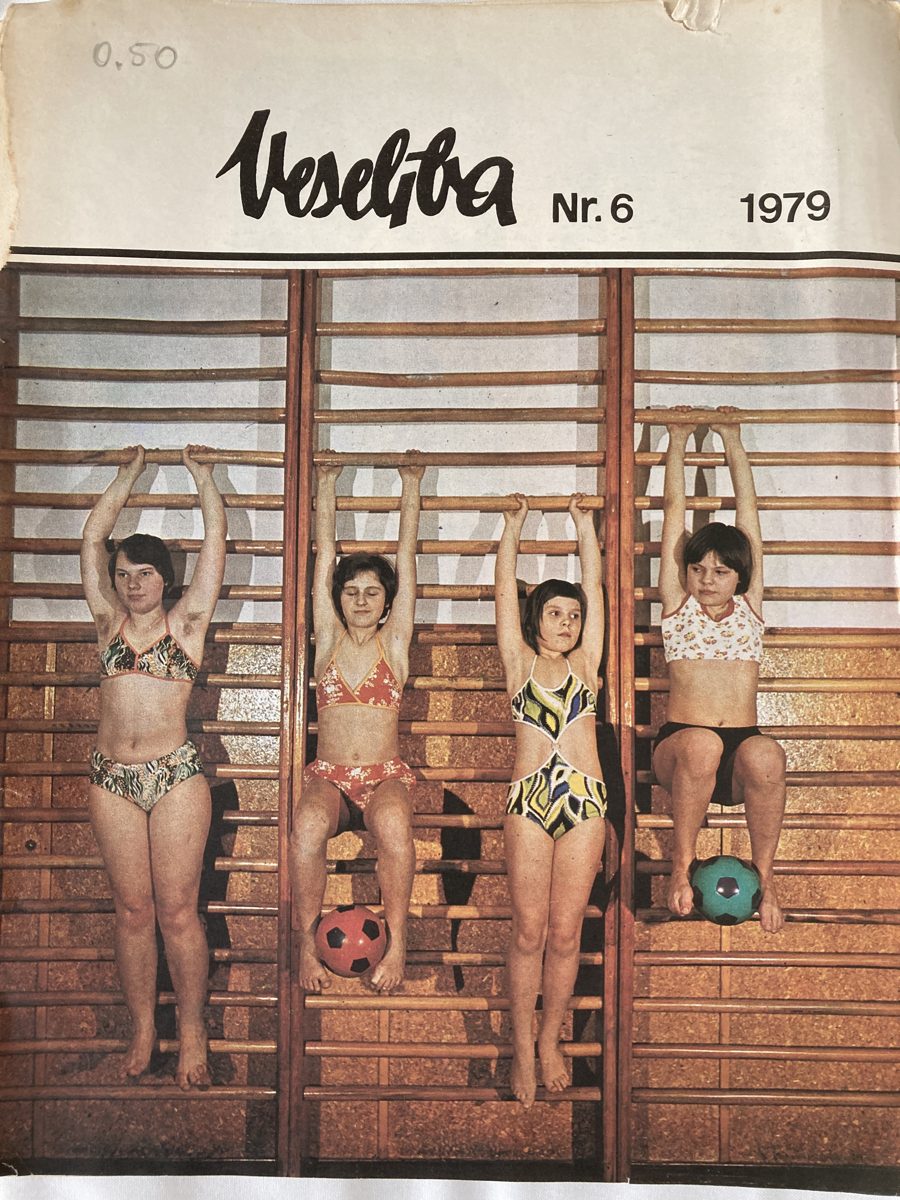
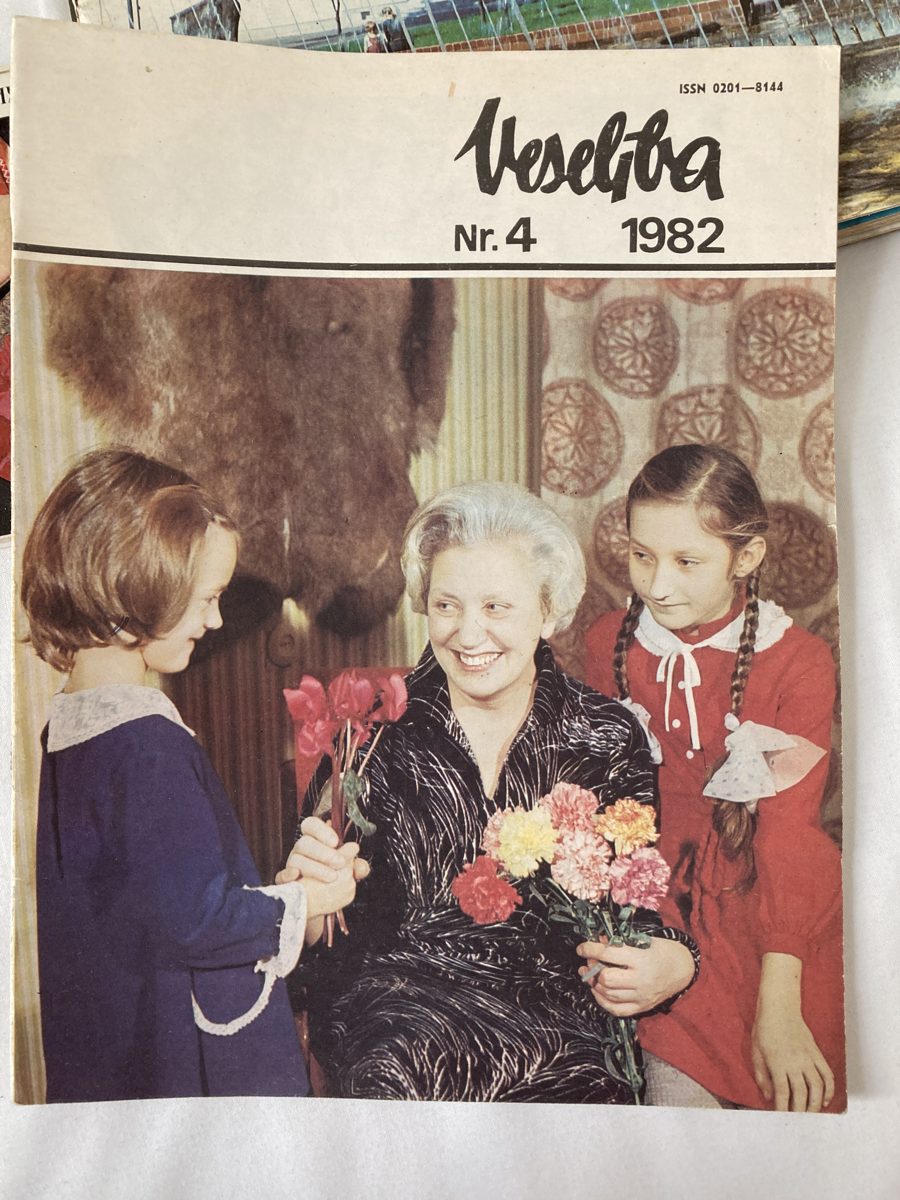
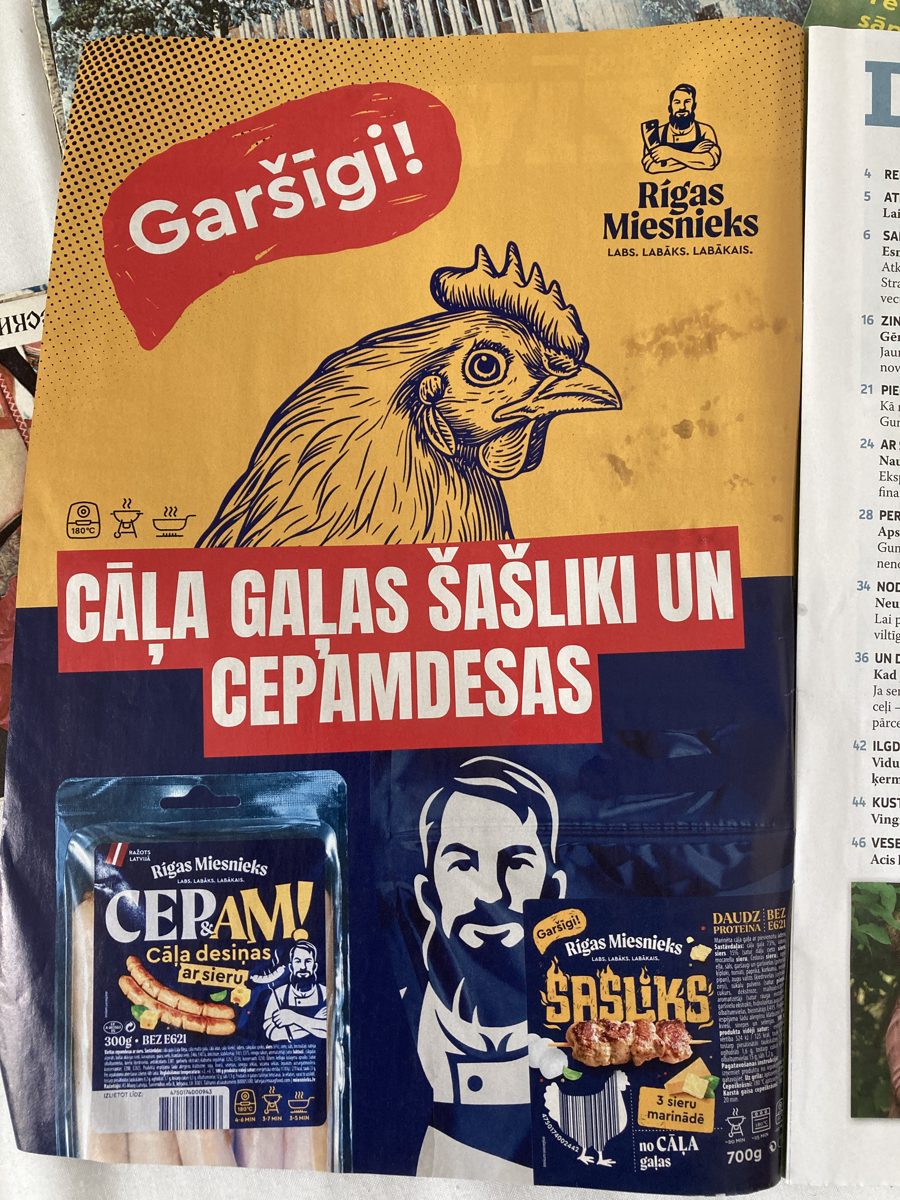
Matt's Riga paintings — sesow.com/riga.htm Dana's Riga paintings — riga.danaellyn.com
Every photograph on this site carries the date, time and GPS position recorded by our phones — Matt's iPhone 13 Pro and Dana's iPhone SE — so the map below is our actual route. Click a dot for the photo; click a day in the legend to switch it off.
Evening flight out of Dulles on Scandinavian Airlines. Dana takes Lincoln's chair at the airport's America 250 display on the way to the gate — a very Washington send-off.
Through Copenhagen to Riga in the afternoon, and into the apartment: a 1903 house by the architect Konstantīns Pēkšēns — the same architect who built the Art Nouveau house on Alberta iela that is now the Riga Art Nouveau Centre. First walk, first courtyard, first plaster.
A morning walk and groceries — including a packet of Jaunpils smoked cheese called Mednieku, “hunters'”, whose label became Matt's painting The hunters. At 12:56 the LTV Culture News crew arrived with Katrīna to film us painting. Dana painted for the camera; Matt showed his first Riga painting.
Morning in the Old Town to meet the Bremen Town Musicians behind St. Peter's — the source of seven Bremen paintings between us — then the Freedom Monument. By 11:30 we were in the Veldze cellars for install day; by 17:37 both walls were up. Dana painted at the apartment window in the afternoon, and the plaque on our building told us who built it: Konstantīns Pēkšēns, 1903.
09:00 live on Radio NABA 95.8 FM, the University of Latvia's station, in the old Post and Telegraph building. On air Matt promised the hosts a painting of a partridge and a black rooster — and painted it that day. A walk home along the city canal and the Opera, then at 19:00 the opening: tours every fifteen minutes, both walls lit, the tiled tunnel flooding from the week's storm.
The morning at the Latvian National Museum of Art — its roof terrace and glass floor — then back to Veldze for Riga's Baltā nakts (White Night) and our artist talk at 14:00. Evening in the Old Town: the Three Brothers, a BLUE COW shop sign, Riga Black Balsam at the Black Magic bar. Dana was still painting at 23:06.
A morning in Maskavas forštate, the Moscow Suburb: the ruins of the Great Choral Synagogue, burned on 4 July 1941; the Latgale flea market; the roof of the Stalin-era Academy of Sciences, 65 metres over the Central Market's zeppelin hangars; and the Riga Ghetto and Latvian Holocaust Museum. At 17:00, the festival's closing panel, Activism Art.
Rainis in Esplanāde park, the Nativity Cathedral, the honour guard at the Freedom Monument, Līvu square, the first-Christmas-tree marker and the Museum of the Occupation of Latvia, then St. Peter's again and a stop back at the radio building. In the afternoon, Soviet-era magazines at the apartment; in the evening, friends from the festival came by for a painting.
Alberta iela, Mikhail Eisenstein's street of screaming faces and sphinxes, and the Art Nouveau Centre in Pēkšēns's own house. Back to the museum, then an afternoon of painting.
The hedgehog poster, a cup of live kvass from a tanker at the Central Market, a last drink in the Old Town, the memorial stones of January 1991 by the city canal — and a final session at the paint table.
Matt's sixtieth birthday, spent flying home — as he predicted on the radio: “I'll be, I think, up in the sky.” He marked it with a painting: this is 60, sixty little rabbits.
Friday 4 September 2026, morning show, 21 minutes. White captions = spoken in English; yellow = translated from Latvian. Our photographs of the studio, then the paintings each one is talking about. Read the transcript →
The hosts, Mārtiņš and Irbe, open in Latvian; Katrīna introduces the festival; then we talk in English about painting four blocks from the White House, bomb-sniffing dogs at the post office, grey peas and sprats, and the Bremen Town Musicians.
Then a moment that turned into a painting. The hosts explain their names: on Mārtiņdiena, Mārtiņš's name day, Latvian tradition offers a black rooster; Irbe means partridge. Matt says he'll paint them. He did — that afternoon. See Partridge and black rooster →
Asked about the work in the show, Dana explained what she’d painted for the festival:
“I made a specific body of work for this show, focusing on — not specifically the meat tax, because that's not a subject for me to weigh in on as an American coming to Latvia. But I had plenty of background painting animals, and how we see them, and how we treat animals differently depending on which animal it is… Say, putting a girl hugging a dog next to a girl hugging a pig and asking: what's the difference here? Why do we love one and eat the other?”— Dana Ellyn, Radio NABA, 4 September 2026
Radio NABA is the University of Latvia's non-commercial station. It broadcasts from Aspazijas bulvāris 5, a building put up in 1902–04 as the city's imperial Post and Telegraph Office; Riga Radio moved into it in 1932. The boulevard is named for the poet Aspazija (1865–1943), wife of Latvia's national poet Rainis — whose granite statue we passed in Esplanāde three days later.
LTV Kultūras ziņas (Culture News) came to the apartment on Wednesday 2 September and filmed us doing what we came to do — painting. Reporter: Alise Zalite. Three minutes, with English subtitles.
Dana talks about the series she made for the festival; Matt about the accident at eight that shaped his work. English transcript →
“Activism Art — Changing the World One Painting at a Time.” Sunday 6 September, 17:00, in the Veldze courtyard: Dana Ellyn, Matt Sesow and the Latvian artist Katrīna Tračuma, moderated by the animal-rights activist Sandris Ādminis. Fifty-one minutes, in English.
“I started painting … as a full-time programmer at IBM in Washington, DC. I had no idea I wanted to paint or could paint. It just kind of came to me when I was 28 years old.”— Matt Sesow
“We paint the times we live in.”— Matt Sesow
“With my art, I learned to be kinder and gentler, and approach it in a way that everyone could … instead of it hitting you immediately.”— Dana Ellyn
Everything written, broadcast or published about the festival and our part in it that we know of, in date order. Latvian articles link to the original and to an automatic English translation.
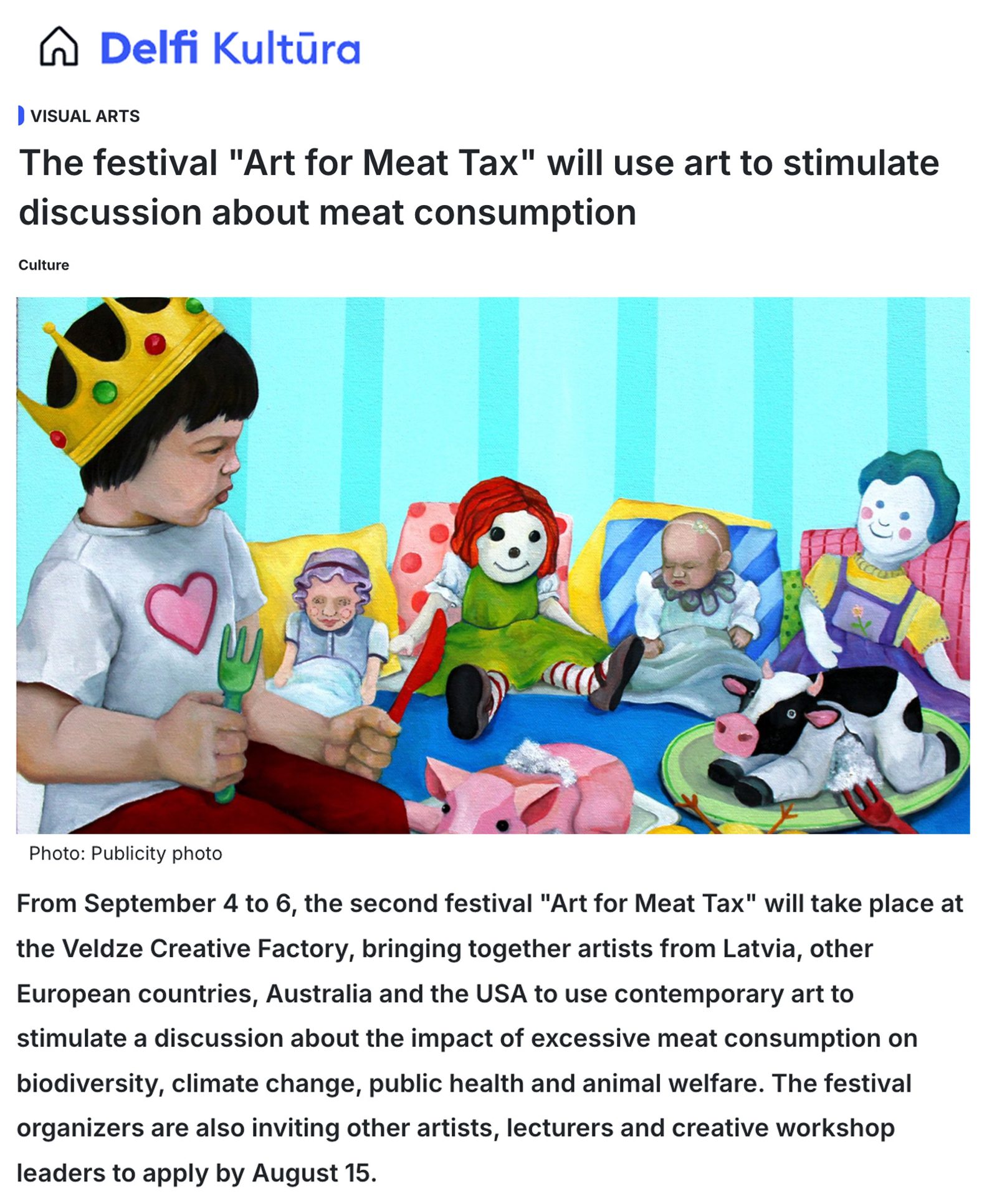 Delfi Kultūra · 21 July 2026
The festival announcement, led by Dana's painting Some Toys are More Equal Than Other Toys. Dana is the only artist quoted: “a cute piglet on a T-shirt and his mother in a shopping bag.”
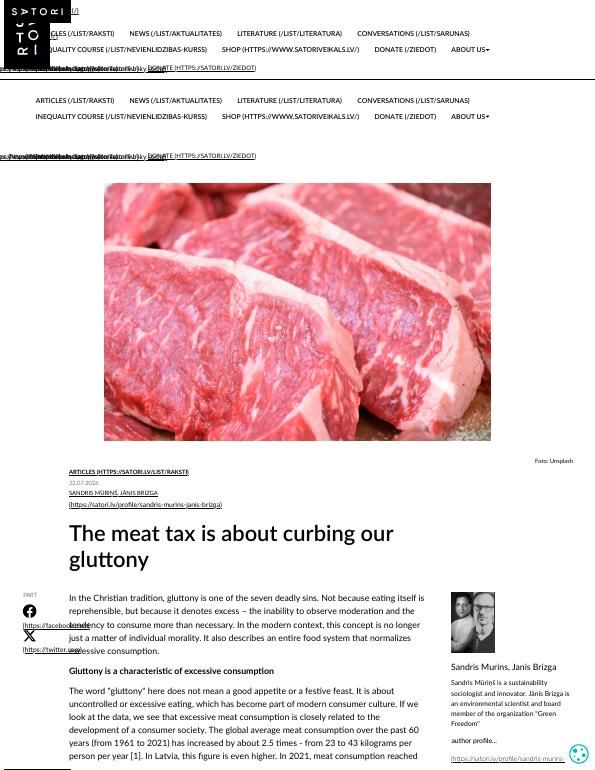 Satori · 22 July 2026
Essay by festival co-organiser Sandris Mūriņš and environmental scientist Jānis Brizga introducing the 2026 theme: gluttony as a feature of a consumer society, not of Latvian tradition.
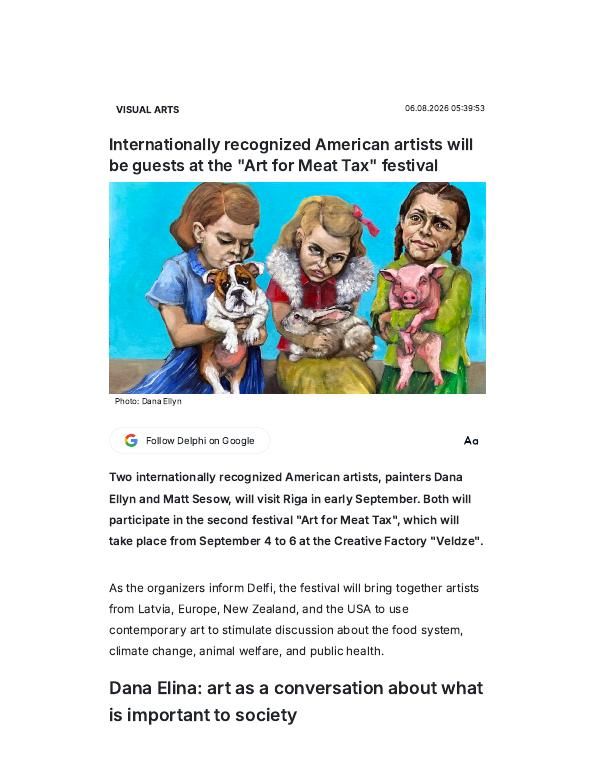 Delfi Kultūra · 6 August 2026
A full feature on Dana and Matt, led by Dana's Playing Favorites. Dana “has become one of the most well-known artists in the United States who speaks out on social issues”; Matt is “one of the most well-known representatives of contemporary American expressive painting”, whose 17,000+ paintings are in collections in more than 40 countries.
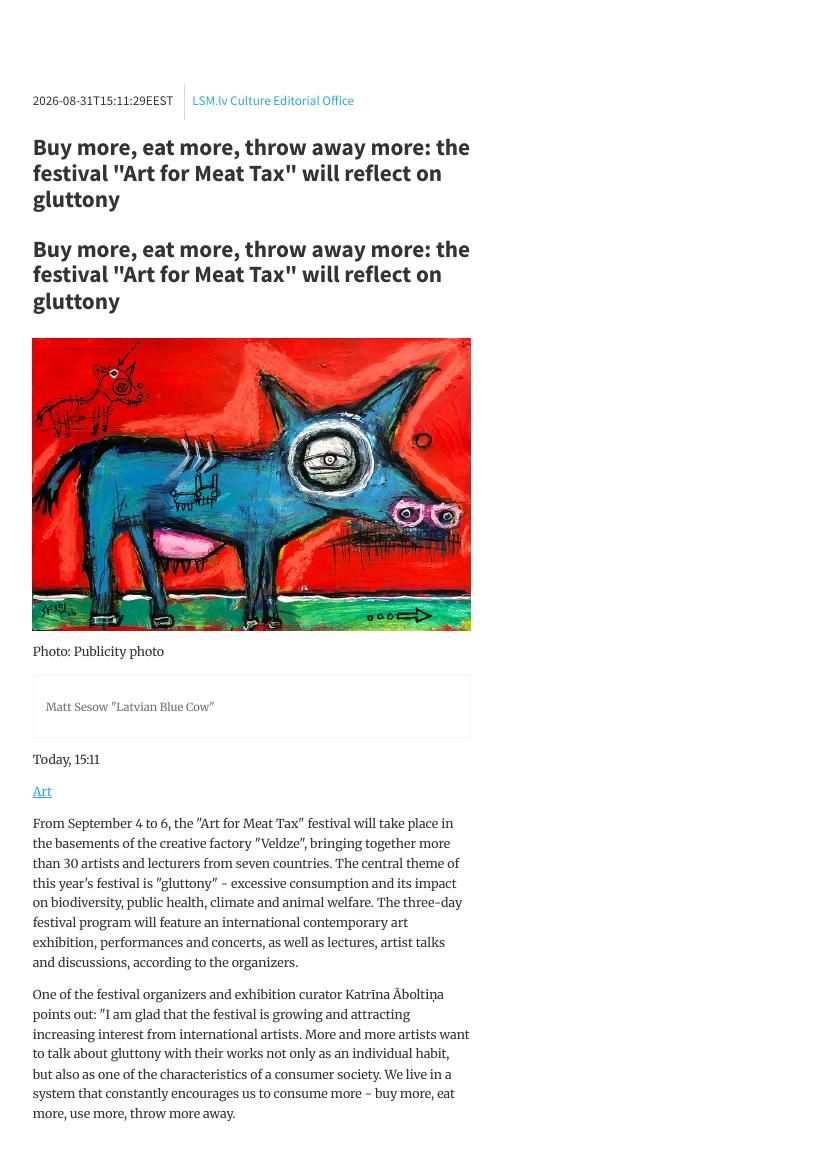 LSM.lv (Latvian Public Broadcasting) · 31 August 2026
The public broadcaster's preview — more than 30 artists and lecturers from seven countries in the Veldze cellars — leads with Matt's painting The Latvian Blue Cow and also shows Dana's Playing Favorites.
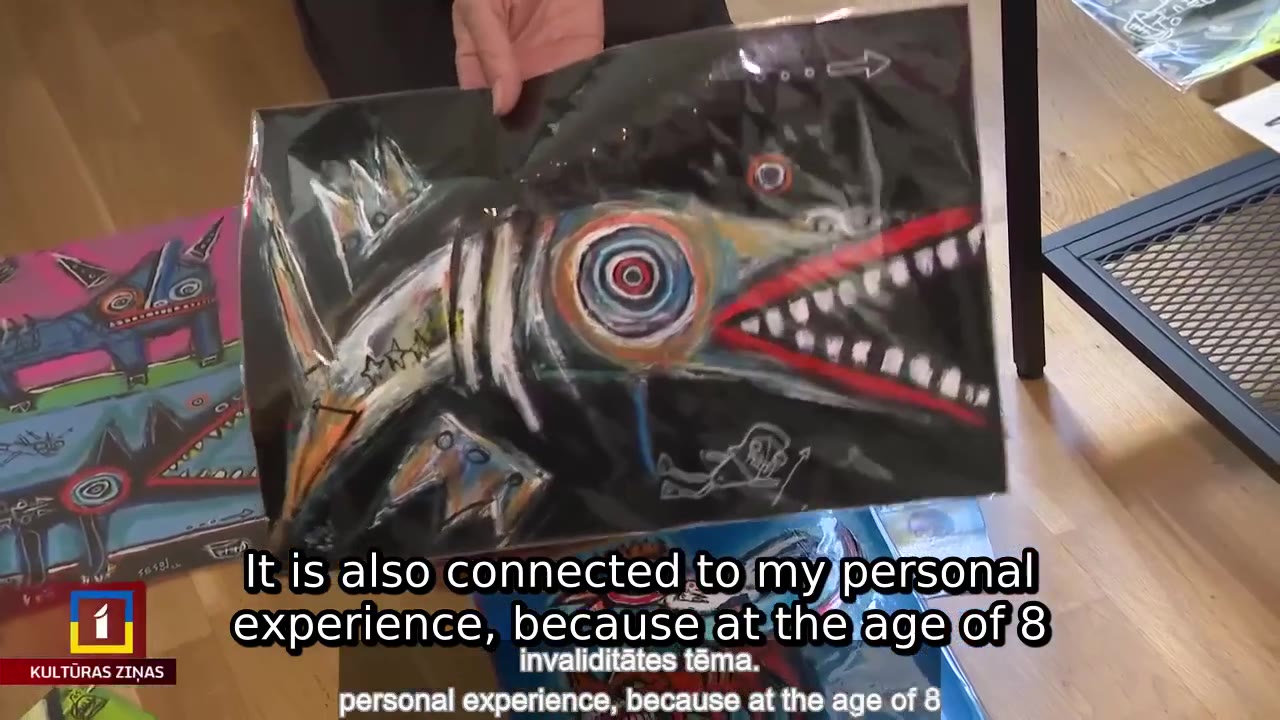 LTV Kultūras ziņas · filmed 2 September 2026
Three-minute Culture News report from our apartment-studio. English subtitles added by us.
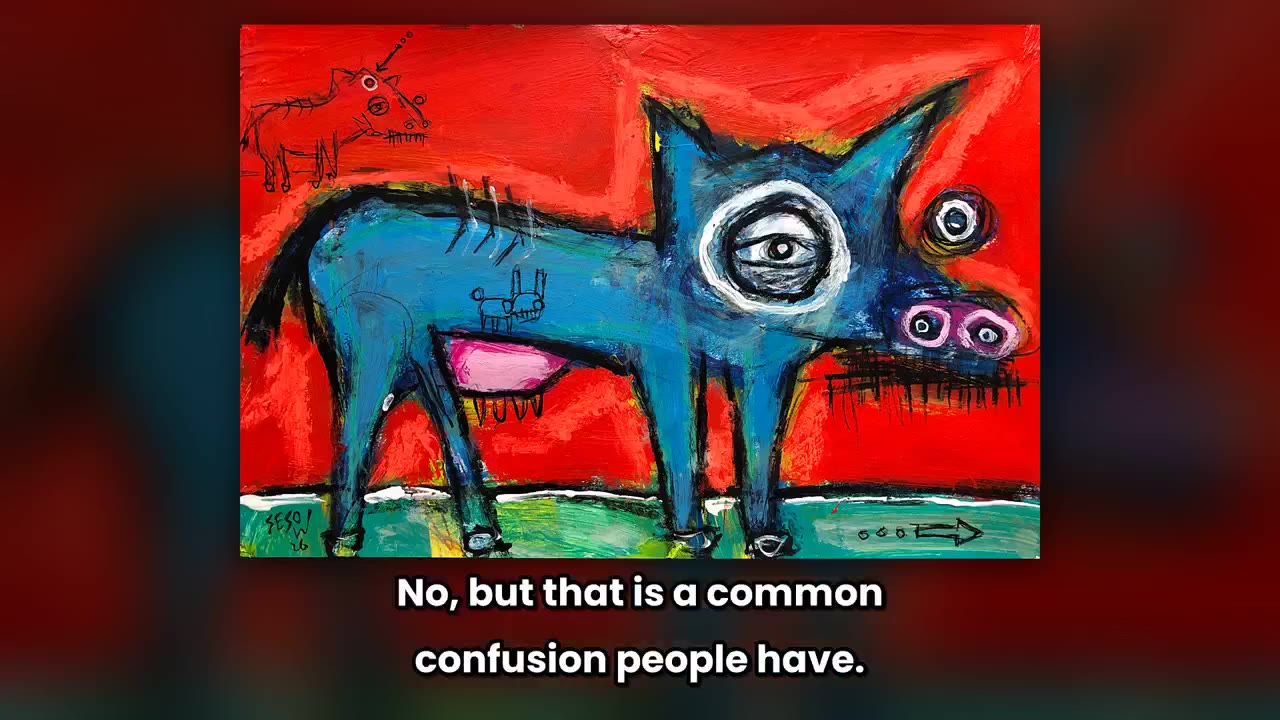 Radio NABA 95.8 FM · 4 September 2026
21 minutes, captioned in English throughout, Latvian translated by hand.
Latvian Radio's morning programme on the festival's opening day, with organisers Katrīna Āboltiņa and Roberta.
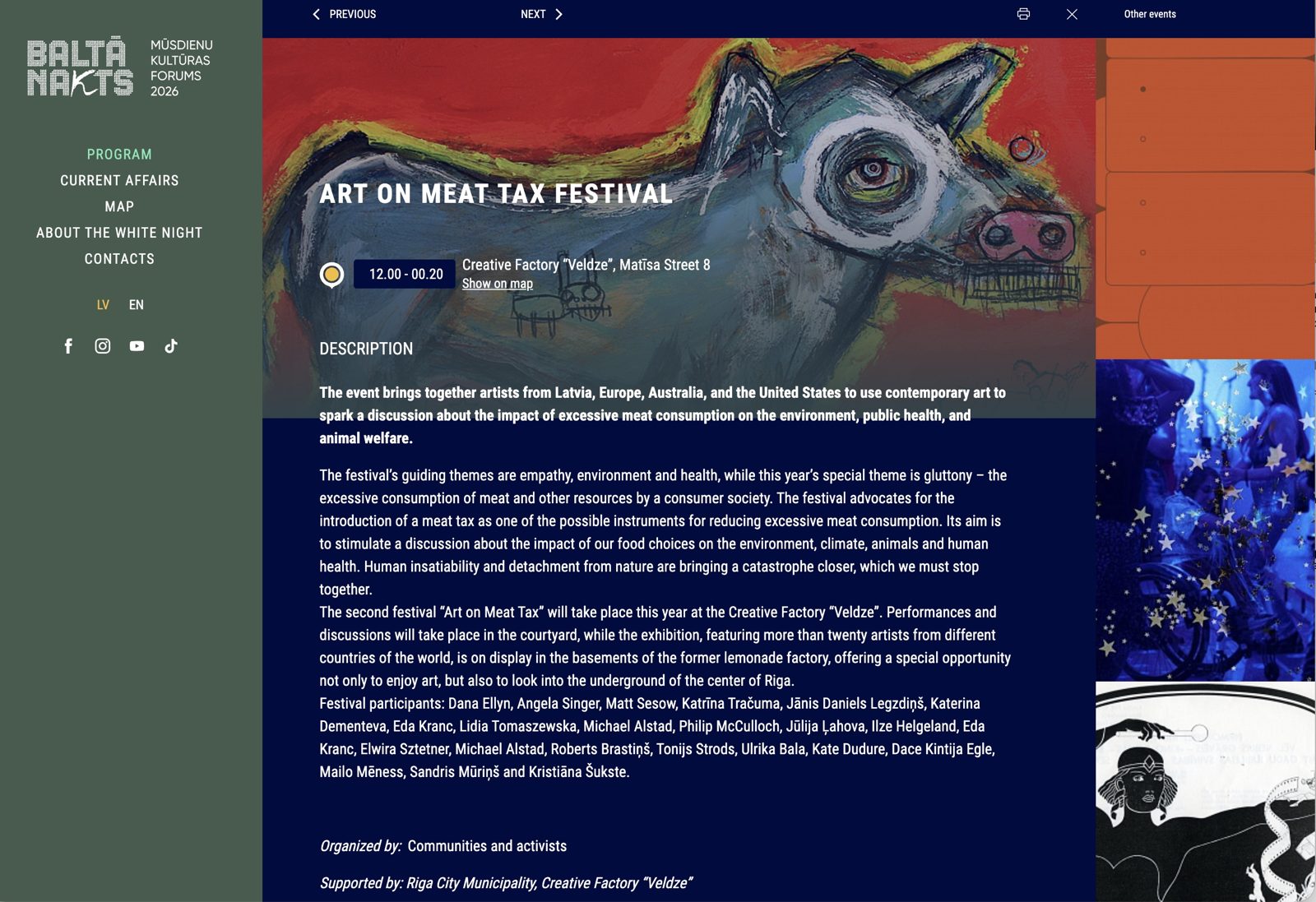 Baltā nakts 2026 · official programme · 5 September
Riga's White Night contemporary-culture forum listed the festival as an official venue, 12:00–00:20, naming both of us among the participants.
The festival's closing panel, with Katrīna Tračuma, moderated by Sandris Ādminis.
Prepared for the festival: ready-to-use bios, key facts and the strongest sources — The Washington Post, the American Visionary Art Museum, Old Dominion University, the UN stamp, and more.
The pre-trip page and Dana's festival press page, with the promotional posts we used.
Our pick of the 249 photographs on this site, each with a note on where it was taken and what's there. The full set — filterable by day, place and photographer — is on the photographs page.
Matt Sesow and Dana Ellyn are two of the hardest-working artists in Washington, DC — and, measured by paintings made and collected, two of the most successful. Matt has sold more than 17,000 original paintings to collectors in more than 40 countries since 1994; Dana has made more than 4,500. Between us, over 21,500 paintings — no galleries, no agents, straight from the studio. We paint every day, and in Riga that meant 38 new paintings in ten days.
Our studio is at Mather Studios, 916 G Street NW, in downtown Washington, a block from the Smithsonian American Art Museum and National Portrait Gallery and a few blocks from the White House. Visitors are welcome — Sundays and weekday mornings work best. And as Dana said at the end of the panel in Riga: if you ever come to DC, stick your head in and say, “hey, we met you in Riga.”
Plan a studio visit — studio.sesow.com
Email Matt: sesow@sesow.com · Email Dana: dana@danaellyn.com